History & CultureTHE HISTORY OF MAFI: OUR ANCESTRAL ORIGINS, TRADITIONS AND CULTURAL HERITAGE
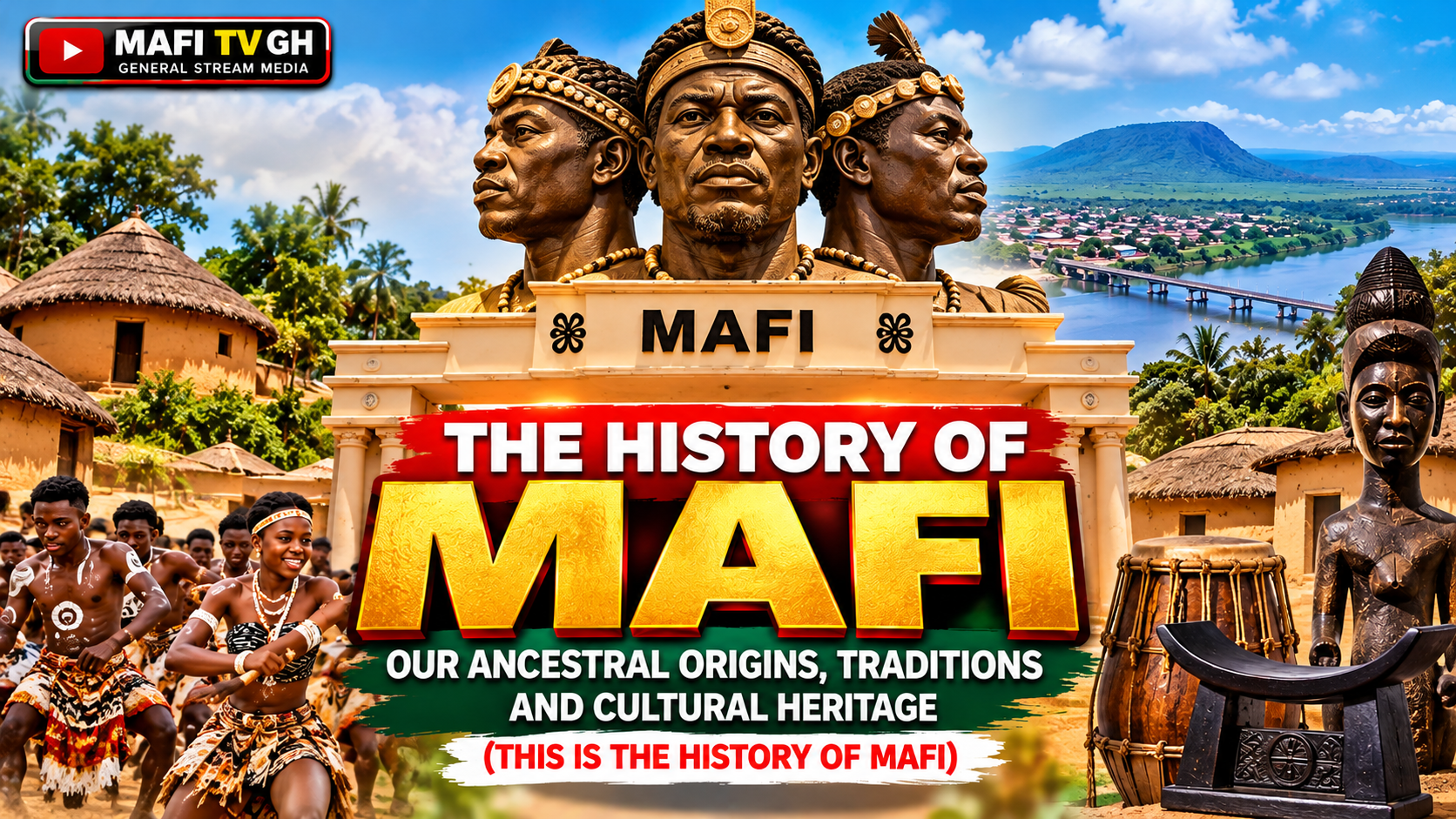
Discover the fascinating history of the Mafi Traditional Area in the Volta Region of Ghana. This article explores Mafi's ancestral origins, Ewe migration traditions, early settlements, traditional clans, military organization, cultural identity, and festivals. Learn about the historical traditions that shaped Mafi and the importance of preserving its heritage for future generations.
This Is the History of Mafi
INTRODUCTION
The history of Mafi is a story of migration, settlement, leadership, bravery, unity, and cultural identity. Located in the Central Tongu District of the Volta Region of Ghana, the Mafi Traditional Area is home to communities whose traditions and ancestral connections have shaped their identity over generations.
Mafi is an important part of the wider Ewe cultural heritage of Ghana. Its history is preserved through oral traditions, family accounts, traditional institutions, festivals, and the collective memories of its people.
Understanding the history of Mafi is essential not only for those who originate from the area but also for younger generations and members of the diaspora who wish to understand their ancestral roots.
THE GEOGRAPHICAL LOCATION OF MAFI
Mafi is situated in the Central Tongu District of the Volta Region of Ghana. The traditional area comprises several communities connected by shared historical experiences, cultural practices, and traditional institutions.
Dugame is recognized as the traditional capital of Mafi, while Adidome serves as the administrative capital of the Central Tongu District.
The area's location within the Volta Region has contributed to its historical interactions with neighbouring Ewe communities and other groups across what is now southeastern Ghana and parts of neighbouring Togo.
Over the years, Mafi has developed its own distinctive identity while maintaining cultural connections with the wider Ewe-speaking world.
THE ORIGINS OF THE MAFI PEOPLE
The origins of the Mafi people are closely connected to the broader history of Ewe migration and settlement in West Africa.
Ewe oral traditions describe movements of ancestral communities from earlier settlements toward present-day southeastern Ghana and neighbouring areas. These movements occurred over generations and involved different groups establishing communities, developing leadership structures, and building relationships with neighbouring populations.
Like many traditional societies, the historical development of Mafi has been preserved largely through oral accounts passed from one generation to another.
These accounts provide important insights into the journeys, experiences, conflicts, alliances, and settlements that contributed to the formation of Mafi communities.
A complete understanding of Mafi's origins requires respect for these oral traditions alongside careful historical research and documentation.
EARLY SETTLEMENT AND KPORDOAVE
Traditional accounts associated with the history of Mafi refer to early settlement movements and ancestral communities, including traditions connected with Kpordoave.
Such settlement traditions are important because they help explain how communities developed their identities, established relationships with surrounding groups, and organized themselves under traditional leadership.
The establishment of settlements was not simply a matter of finding land. It also involved creating social structures, identifying leadership responsibilities, maintaining family connections, and developing customs that could be passed on to future generations.
The history of Mafi should therefore be understood as a collective story involving different ancestral groups and communities whose experiences contributed to the development of the traditional area.
Further documentation of individual settlement traditions is important to ensure that the names, events, and contributions of ancestors are accurately preserved.
THE EIGHT CLANS OF MAFI
Traditional accounts identify several clans associated with the history and identity of the Mafi Traditional Area.
These include:
1. Torfi
2. Gborta
3. Akorto
4. Foto
5. Gevie
6. Aklorbor
7. Aziewa
8. Toh, also referred to in some accounts as Tovie.
These clan names form part of the historical and cultural identity associated with Mafi.
Clans are important in traditional Ewe society because they preserve family histories, ancestral relationships, customary responsibilities, and a sense of belonging.
They also provide connections between the past and the present by linking contemporary generations to the people and events remembered in their oral traditions.
The history of each clan deserves proper documentation, including its ancestral origins, settlement history, traditional responsibilities, and contributions to the development of Mafi.
Preserving these accounts can help younger generations understand the relationships among Mafi's communities and appreciate the diversity within their shared heritage.
Note: Clan names, spellings, and historical accounts should be verified with knowledgeable elders and recognized traditional authorities to ensure accuracy.
BOMETSULE AND KOFI AKPO IN MAFI TRADITIONS
Historical accounts associated with Mafi include traditions referring to Bometsule and Kofi Akpo.
Names preserved in oral history often carry significant meaning because they connect communities to remembered ancestors, historical events, leadership traditions, and settlement experiences.
The stories associated with such figures and places form part of the broader body of knowledge through which the history of Mafi has been transmitted.
Documenting these traditions carefully is important to ensure that the contributions attributed to particular individuals are not lost or confused as generations pass.
Further interviews with traditional authorities, elders, family historians, and custodians of oral tradition can help establish a fuller account of the roles associated with Bometsule and Kofi Akpo.
AZIEWA, DENKYIRA, AND HISTORICAL CONNECTIONS
The history of Mafi is also connected to wider historical traditions concerning relationships among communities and political powers in the region.
References to Aziewa and Denkyira form part of the historical subjects that require careful examination when studying Mafi's ancestral experiences.
The history of West African communities includes periods of migration, warfare, political expansion, alliances, and the movement of populations. These developments influenced settlement patterns and the relationships among different traditional societies.
However, the precise events connecting particular Mafi traditions to Denkyira and the role attributed to Aziewa should be established through reliable oral accounts and historical evidence.
Preserving these accounts accurately is essential to ensuring that Mafi's history is documented responsibly and that future generations can distinguish established historical information from traditions that require further investigation.
TRADITIONAL LEADERSHIP AND GOVERNANCE
Traditional leadership has played an important role in the social organization and cultural continuity of Mafi.
Traditional authorities help preserve customs, settle certain customary disputes, guide community affairs, and maintain connections between ancestral traditions and contemporary life.
Traditional institutions also provide a framework through which communities organize festivals, preserve customary practices, and address matters affecting their collective identity.
The Mafi Traditional Council remains an important institution in the preservation and promotion of the traditional area's cultural heritage.
Understanding the history of Mafi therefore requires attention not only to migration and settlement but also to the development of traditional leadership, customary responsibilities, and relationships among communities.
MILITARY ORGANIZATION AND THE DEFENCE OF THE COMMUNITY
Military organization and community defence form another important subject in the historical traditions of many Ewe communities, including accounts associated with Mafi.
In earlier periods, communities sometimes organized their able-bodied members to defend settlements, protect inhabitants, and respond to threats from rival groups.
Leadership, coordination, courage, and cooperation were important elements of these traditional defence systems.
Historical accounts referring to military organization in Mafi should be preserved because they can provide insight into how earlier generations understood security, leadership, and collective responsibility.
Where oral traditions identify particular war leaders, military fronts, or important encounters, those accounts should be recorded carefully with the help of knowledgeable elders and traditional historians.
This approach will help preserve the historical memory of Mafi while ensuring that the people, events, and contributions involved are represented accurately.
MAFI'S TRADITIONAL APPELLATIONS AND CULTURAL IDENTITY
Traditional appellations, praise expressions, and historical sayings are important elements of Ewe cultural heritage.
They may communicate courage, ancestry, communal pride, historical experiences, and the values that a community seeks to preserve.
Within Mafi, such expressions can serve as reminders of the experiences and achievements of earlier generations.
They also help communicate cultural knowledge in ways that are memorable and meaningful to younger people.
Recording these appellations in their original forms, with accurate explanations and translations where appropriate, is an important step toward safeguarding Mafi's intangible cultural heritage.
Traditional expressions should be documented with the guidance of people who understand their historical meanings and the circumstances in which they are used.
FESTIVALS AND THE PRESERVATION OF MAFI HERITAGE
Festivals are important opportunities for communities to celebrate their history, reaffirm their identity, and bring people together.
They provide occasions for traditional authorities, families, community groups, residents, and members of the diaspora to reconnect with their ancestral heritage.
Through traditional ceremonies, music, dance, storytelling, and other cultural activities, festivals can help preserve knowledge that might otherwise disappear over time.
They also create opportunities to promote tourism, support local businesses, encourage development, and introduce Mafi's cultural identity to visitors from other parts of Ghana and abroad.
The preservation of Mafi's festivals and customary practices is therefore an important responsibility shared by traditional authorities, families, cultural organizations, the media, and the wider community.
MAFI HOGBETSOTSO: REMEMBERING OUR HISTORY
MAFI HOGBETSOTSO is an important part of the cultural identity and historical memory of the Mafi community.
The name connects the celebration to the wider importance of remembering ancestral experiences, preserving cultural traditions, and passing historical knowledge from one generation to another.
The year 1953 is a significant historical reference associated with the festival's history in earlier accounts. The precise circumstances surrounding that date, including the festival's origins and development, should be documented through reliable traditional records and testimony from knowledgeable elders.
Festivals are more than occasions for celebration. They can also provide opportunities for historical education, community reflection, and discussions about the future.
By documenting the history associated with MAFI HOGBETSOTSO, the community can help ensure that its significance remains understood by younger generations and members of the diaspora.
As preparations for future celebrations continue, historical research and cultural documentation should remain important parts of the process.
WHY WE MUST PRESERVE THE HISTORY OF MAFI
A community that understands its history is better positioned to preserve its identity and pass its traditions to future generations.
Unfortunately, oral histories can be lost when elders pass away without their knowledge being recorded. Names, dates, historical events, traditional sayings, and family accounts may disappear if they are not carefully documented.
Preserving Mafi's history requires a collective effort involving traditional authorities, elders, researchers, families, educational institutions, cultural organizations, and the media.
Young people should be encouraged to learn from elders, ask questions about their ancestry, and participate in documenting the history of their communities.
Written publications, photographs, audio recordings, interviews, documentaries, and digital archives can all contribute to this effort.
It is equally important to verify historical information, respect differences among oral traditions, and ensure that accounts are presented fairly.
Through these efforts, Mafi can strengthen its cultural identity and provide future generations with a valuable record of their ancestral heritage.
THE ROLE OF MAFI TV GH IN PROMOTING MAFI'S HISTORY
MAFI TV GH recognizes the importance of documenting and promoting the history, culture, and traditions of the Mafi Traditional Area.
As a Ghanaian media platform powered by General Stream Media, MAFI TV GH seeks to provide opportunities for cultural education, community storytelling, and the preservation of local history.
Through news articles, interviews, documentaries, cultural features, and digital publications, the platform aims to help bring Mafi's stories to a wider audience.
We encourage traditional authorities, elders, family representatives, historians, researchers, and community members to contribute historical information that can help improve the accuracy and completeness of our records.
Our goal is to ensure that the history of Mafi remains accessible to people living in the traditional area, throughout Ghana, and across the diaspora.
Every family has a story. Every community has a history. Together, these stories help us understand who we are and where we come from.
CONCLUSION: OUR HISTORY, OUR IDENTITY, OUR RESPONSIBILITY
The history of Mafi is an important part of the cultural heritage of the Volta Region and Ghana as a whole.
Its ancestral traditions, clans, settlements, leadership structures, cultural expressions, and festivals form part of a legacy that deserves to be preserved and studied.
While oral traditions provide valuable foundations for understanding the past, continued research and documentation are necessary to establish fuller historical accounts and protect important knowledge from being lost.
The responsibility of preserving Mafi's heritage belongs to everyone who values the community's identity and future.
Let us encourage our elders to share their knowledge, inspire our young people to learn about their ancestry, and support efforts to document the stories that have shaped our communities.
By working together, we can preserve Mafi's cultural heritage and ensure that future generations have the opportunity to learn from the experiences of those who came before them.
OUR HISTORY IS OUR IDENTITY. OUR CULTURE IS OUR HERITAGE. OUR FUTURE DEPENDS ON WHAT WE PRESERVE TODAY.
MAFI TV GH — YOUR STORIES, YOUR CULTURE, YOUR VOICE.
Powered by General Stream Media.
The History of Mafi: Ancestral Origins, Clans and Cultural Heritage.